
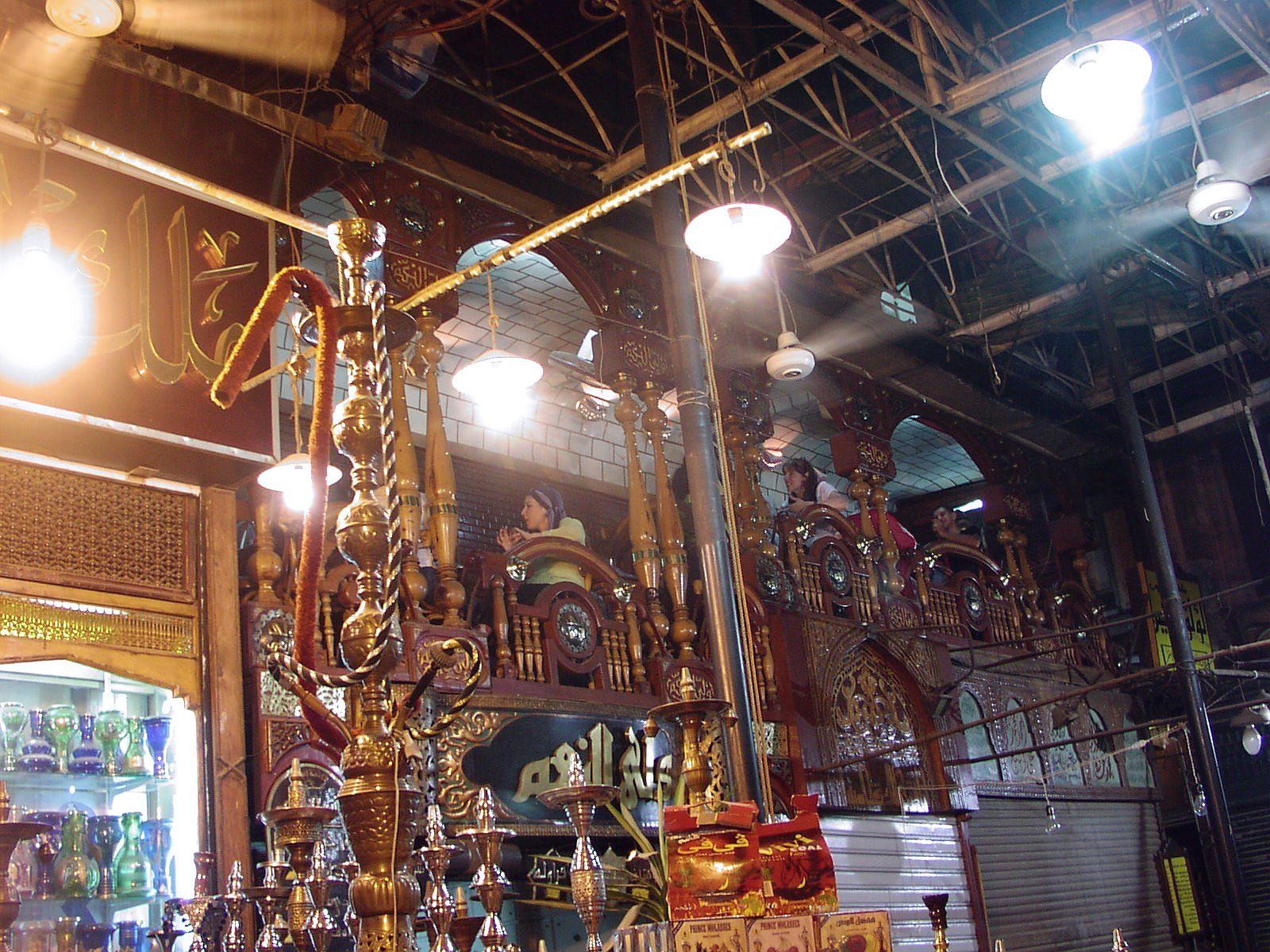
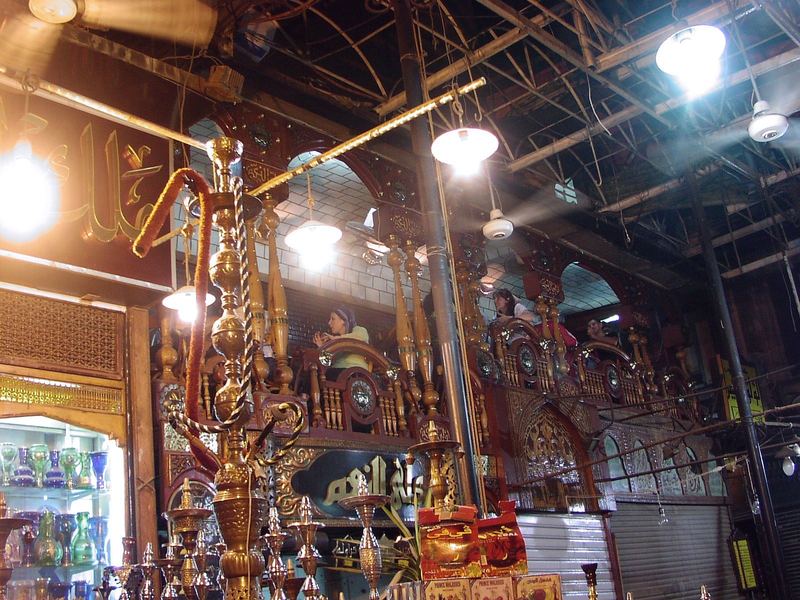
Khan el-Khalili is Cairo’s great historic bazaar, a maze of lanes that has been trading for more than six hundred years. It is lively by day, but most atmospheric after dark, when the lamp shops glow and the cafés around Al-Hussein Square fill up.
Getting there
The easiest way is a taxi or a ride-hailing app to Al-Hussein Square (Midan El Hussein), at the edge of the bazaar. Traffic around Al-Azhar can be slow in the evening, so allow extra time.
What to see
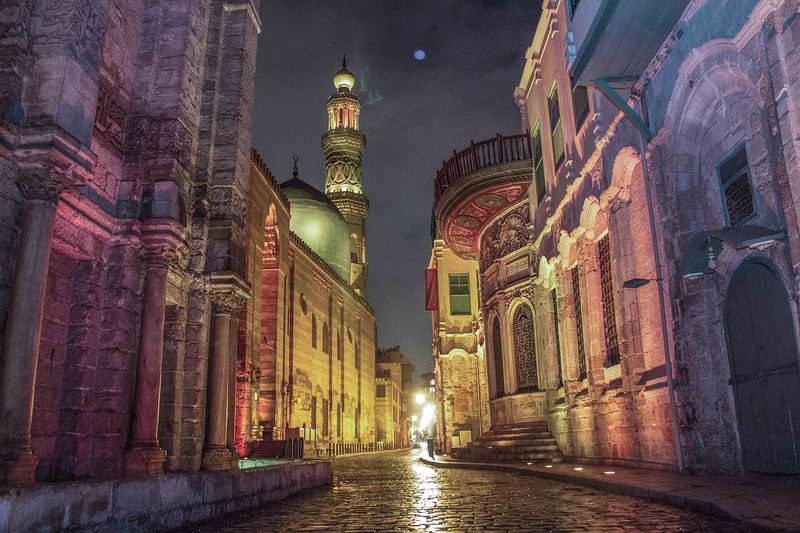
Walk north from the bazaar along Al-Muizz Street to see its lit-up mosques and madrasas, and look out for the old city gates at its far end. Al-Azhar Mosque is just across the road from Al-Hussein Square.
See options & prices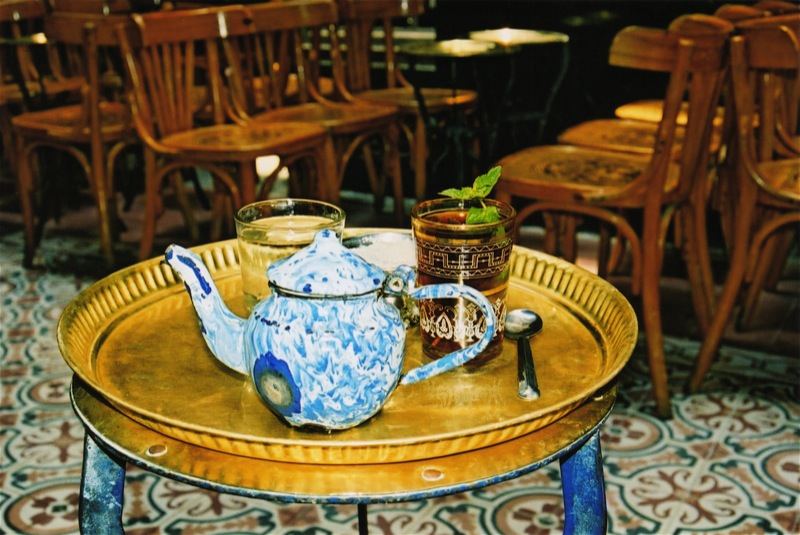
Where to sit
El Fishawy, tucked into an alley of the bazaar, is one of Cairo’s oldest cafés and a classic stop for mint tea. The cafés around the square are busy and noisy in the best way, and great for people-watching.
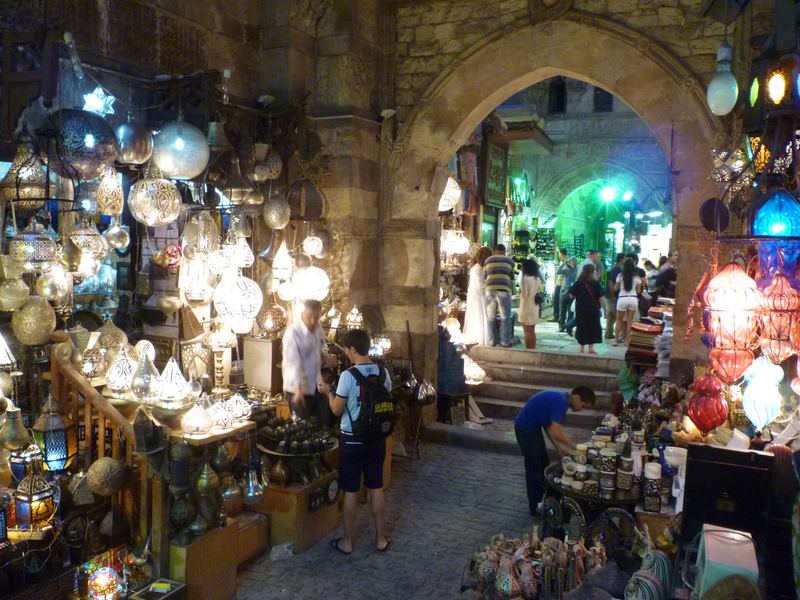
Shopping and bargaining
Lamps, spices, copper, textiles and silver are the bazaar’s classics. Bargaining is expected: start lower than the first price, stay friendly, and be ready to walk away — you will often be called back with a better offer.
Practical tips
Wear comfortable shoes and modest clothes if you plan to enter the mosques. Keep small notes for tea and tips, and keep your bag in front of you in busy lanes. If someone offers to guide you to a shop, a polite “no, thank you” is enough.
Frequently asked questions
When is the best time to visit Khan el-Khalili?
Early evening until late at night, when the lamps are lit and the cafés are full. Opening hours vary by shop.
Is Khan el-Khalili busy at night?
Yes, with families and visitors until late. As in any crowded market, keep your bag in front of you.
Do I need a guide?
No, but a guide helps you find the best monuments and workshops and explains the history.
Photos: Mmelouk (CC BY-SA 4.0) · Mohamedsamir1994 (CC BY-SA 4.0) · Charlie Phillips (CC BY 2.0) · Daniel Nussbaum (CC BY-SA 3.0) — Wikimedia Commons